Home › Septic Tank Pumping in Clarksville, TN
Septic Tank Pumping in Clarksville, TN
Routine pumping, tank access and a clear record of the work.
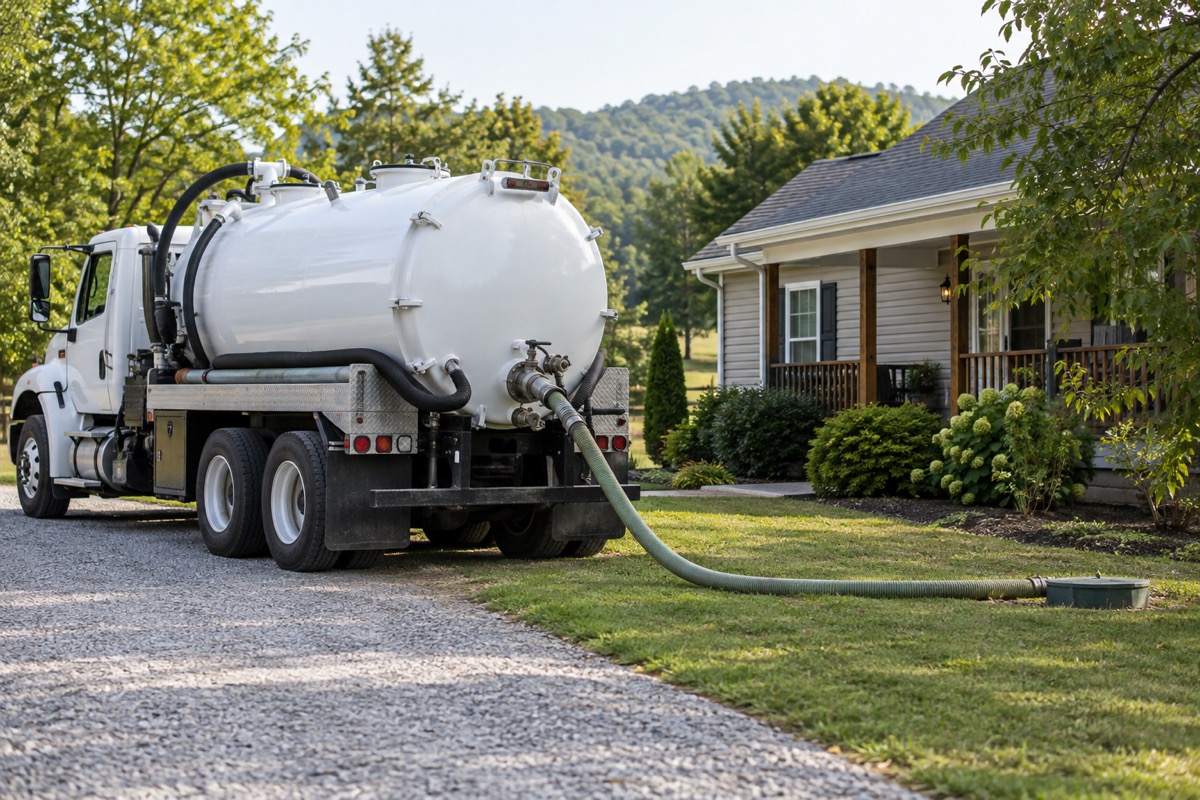
Pumping starts with your tank and its service history
Tell us when the tank was last pumped, its capacity if known, and whether you have accessible lids or risers. These details help establish the work and equipment access before a visit. If the tank location is unknown, say so when requesting service; locating and digging may be separate items.
What to ask before a pump-out
Confirm which tank compartments are included, how buried access will be handled, and whether hauling and disposal are included. Ask for a service record that notes observations and any recommended follow-up. Pumping removes accumulated material; it does not repair damaged components or restore a failing drainfield.
How often should a septic tank be pumped?
The EPA describes three to five years as a typical household pumping interval, but your tank size, occupancy and use affect the schedule. A professional assessment is more useful than choosing a date by guesswork. Keep past service records together so the next visit starts with reliable information.
Reference: EPA septic maintenance guidance.
Pumping, inspection and repair are different services
A scheduled pump-out removes accumulated material from the tank. It does not automatically include a transaction inspection, pump replacement or drainfield diagnosis. Tell us whether this is routine maintenance, an overdue service or a response to a backup so we can define the right appointment. A recurring problem needs its cause assessed rather than an assumption that another pump-out will cure it.
Access can change the quote
Share any tank location records, known compartments and prior service notes. Buried lids, uncertain tank location and restricted truck access can add work before pumping begins. We determine access requirements; you should not open a tank or enter any septic structure. Confirm whether locating, uncovering and restoring the access area are included in the price.
Use the findings to plan the next service
A useful service record identifies the tank serviced, observed condition and recommended follow-up. The EPA septic-care guide explains that household size, wastewater volume, solids and tank size affect pumping frequency. A calendar reminder is useful, but the actual system and service findings should shape the interval.
Scheduling around a Clarksville property
Have the property ZIP code, gate arrangements and an authorized contact ready. If a sale is involved, describe the required report before booking; a receipt for pumping may not satisfy the requested inspection. Explore septic inspections or review septic service cost factors before comparing estimates.
Before you approve the work
- Confirm tank capacity, compartments and access assumptions.
- Clarify disposal, lid access and restoration charges.
- Request service notes and a separate explanation for any repair recommendation.
How we determine your septic pumping interval
A useful pumping schedule reflects the property and system rather than a date copied from another household. Previous service measurements and records can help a technician explain the next recommended interval.
Information to supply
Have the tank size if known, household occupancy, previous pumping date and relevant service reports available. Tell us about changes in use, such as additional occupants, without guessing at system capacity.
Avoid calendar-only decisions
Ask what the previous service found and whether those findings support the suggested timing. Alternative systems and mechanical components can have maintenance requirements beyond ordinary tank pumping.
Document the recommendation
Request a written next-service recommendation and a record of any separate inspection or component maintenance. Keep notes of changes in occupancy or water use so the plan can be revisited when circumstances change.
Before booking
If you have active symptoms, describe them separately; an ordinary maintenance schedule is not a reason to defer investigation of a current problem.
Septic effluent filter service: what to ask before a visit
An effluent filter, when part of the installed system, has a different role from the tank's pumping schedule. Ask us to identify the system components and maintenance requirements rather than assume pumping includes every filter-related task.
Useful records
Share the system design or prior service report if available. Tell us about slow drains, alarms or other recent changes. Homeowners should not remove tank lids or reach into septic components to identify a filter.
Service scope
Clarify whether the visit includes locating access, inspecting the relevant component, cleaning or replacement where appropriate and documenting its condition. Any work beyond the agreed maintenance scope should be explained before approval.
Questions about recurrence
If maintenance has been needed unusually often, ask whether we recommend additional evaluation. Repeating the same task without understanding the system's behavior may leave a different problem unresolved.
Before booking
Confirm whether filter service is a separate item from pumping and what records you will receive afterward.
Septic maintenance versus products: questions before spending
A product marketed for septic systems should not replace understanding the maintenance requirements of the installed system. Start with our documented findings before buying a treatment to address an unexplained symptom.
Clarify the objective
Ask what specific condition the product is intended to change and how success would be verified. An odor, slow drain or recurring alarm needs assessment rather than an assumption that a product will resolve it.
Compare the costs
Separate ordinary pumping and component maintenance from optional products or treatments. Ask for the product instructions and any limitations in writing. Be cautious about a claim that eliminates the need for future maintenance without evidence specific to your system.
Use independent guidance
Review the EPA's homeowner septic resources and discuss the system's requirements with an appropriate professional. Do not combine chemicals or attempt hazardous treatments yourself.
Before booking
Share any products already used so we have a complete account of changes before assessing the problem.
Septic pumping versus repair: different scopes and outcomes
Pumping removes accumulated material from the tank; a repair addresses a failed or damaged component. A quote should make clear which service is proposed and what problem it is expected to resolve.
When the distinction matters
An overdue maintenance visit can be different from a response to an active backup. Tell us why you are calling and what has changed. Do not assume that a recently pumped tank rules out every wastewater issue.
What to request
Ask for the service findings, components observed and any recommended follow-up. If a repair is proposed after pumping, request its basis and a separate scope instead of treating the initial visit as approval for all further work.
Compare proposals
Check whether access, pumping, disposal, inspection notes and repairs are separate line items. A lower headline price may describe less work rather than a more economical solution.
Before booking
Ask whether we will discuss unexpected findings before starting any repair beyond the original authorization.
Pumping interval estimator
How it works: Penn State Extension estimates each adult adds roughly 60 gallons of sludge and scum to a tank each year, and recommends pumping before those layers fill about 30% of the tank. We add 50% for a garbage disposal as a rough allowance. This is a planning estimate, not an inspection. Source: Penn State Extension, Septic Tank Pumping; EPA suggests most household tanks be pumped every 3 to 5 years.